Far too often the glazier is treated as a secondary trade, called in at the end of the job once everything else is finished. That is a mistake. Bringing the glazier in at the design stage means technical constraints are anticipated, solutions are optimised and nasty surprises are avoided at handover. Here is why Vitralux should be part of your project team from the outset.
1. Structural and façade glazing: to be designed with the architect
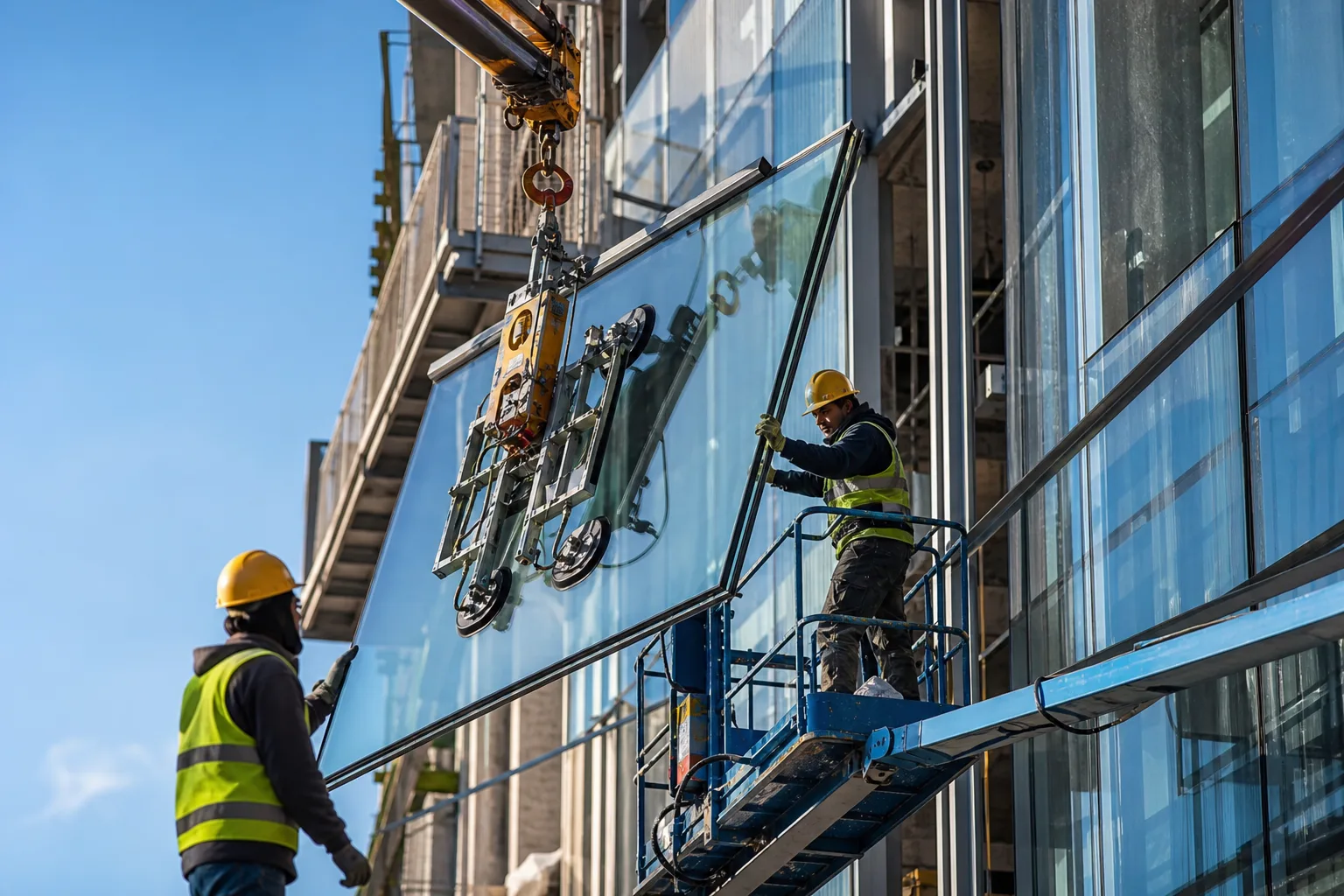
Glass façades — bonded glazing, structural glazing, point fixing, louvres, curtain walling — impose structural constraints that have to be built into the drawings from the design stage. Glass thickness, anchoring systems, expansion joints and thermal values (Ug) all feed into the calculation of the supporting structure. A glazier involved from the drawings onwards saves expensive changes once work is under way.
2. Fire-rated glazing: a regulatory requirement to plan for
In any building subject to fire safety regulations — premises open to the public, high-rise buildings, offices — fire-rated glazing (EI30, EI60, EI90, EI120) is mandatory in certain zones. This glazing has specific dimensional characteristics and has to be installed in certified, compatible frames. Anticipating those constraints early avoids problems when the fire officer inspects the building.
3. Glazed office partitions: plan the service routes
A glazed office partition (Deubl Alpha, TWS, acoustic) needs its service routes for cables and trunking, and its fixing points in the floor and the ceiling, planned in from the shell-and-core stage. A slab that has not been prepared to take a partition profile means extra work and extra cost. Vitralux can come in early to define the provisions required.
4. UV printing and signage: to be ordered before the job ends
Glazing with UV printing — a logo, a pattern, signage — has to be ordered well before the building is handed over: the printing is done on the raw glass before toughening, and the lead times are longer than for standard glazing. If the signage is not ordered in time, plain glazing goes in and has to be replaced later.
Vitralux works regularly with Luxembourg architects, engineering consultancies and developers. We are equipped to answer public and private tenders, to supply certificates of conformity, and to coordinate our work with the other trades on site.