Vitrapolish — On-Site Polishing of Scratched Glass in Luxembourg
A shopfront scratched by vandals, a glass door covered in scuffs, a shower screen gone dull: replacing the glass is not the only answer. Vitrapolish removes surface scratches and scuffs from glazing exactly where it stands — faster and cheaper than a replacement.
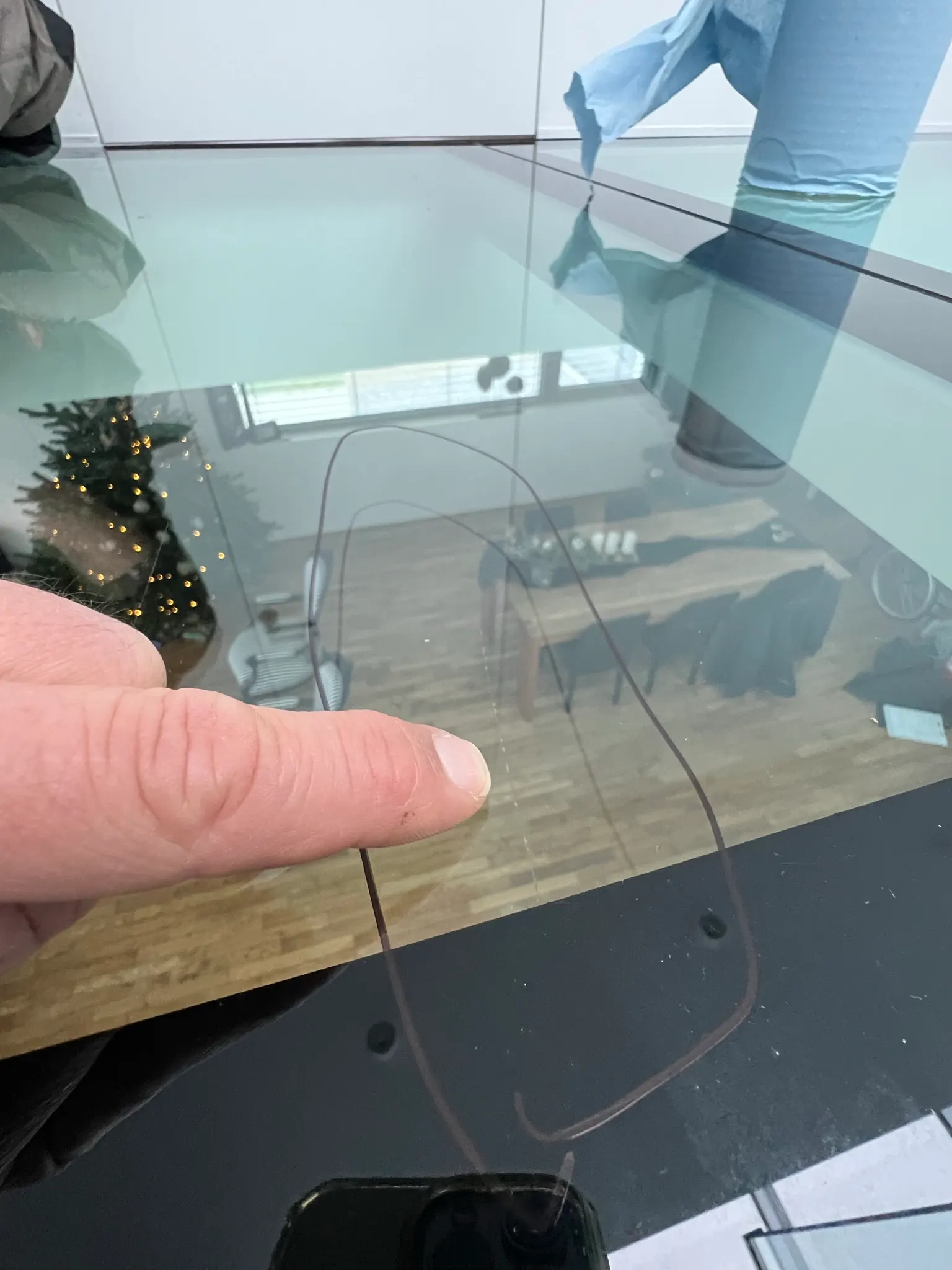
Restore clarity instead of replacing the glass
Vitrapolish is the Vitralux division specialising in glass polishing and scratch removal. This professional technique restores the clarity and the looks of scratched glazing without taking it out: faster, cheaper and kinder to the planet than replacing the whole pane as a matter of course.
How does Vitrapolish remove scratches from your glass?
Glass polishing is controlled abrasion: a sequence of abrasive discs of decreasing grit gradually takes off the scratched layer of glass, then a final polish with dedicated compounds brings back clarity and shine. How deep we have to go depends on how deep the scratches are, so Vitrapolish assesses every pane first to establish whether polishing is technically feasible and whether the remaining thickness will still meet safety requirements.
Survey
We measure the depth and the extent of the scratches. That determines the technical feasibility and the thickness left after polishing.
Masking
The frame and the surrounding surfaces are carefully protected before polishing starts.
Progressive abrasion
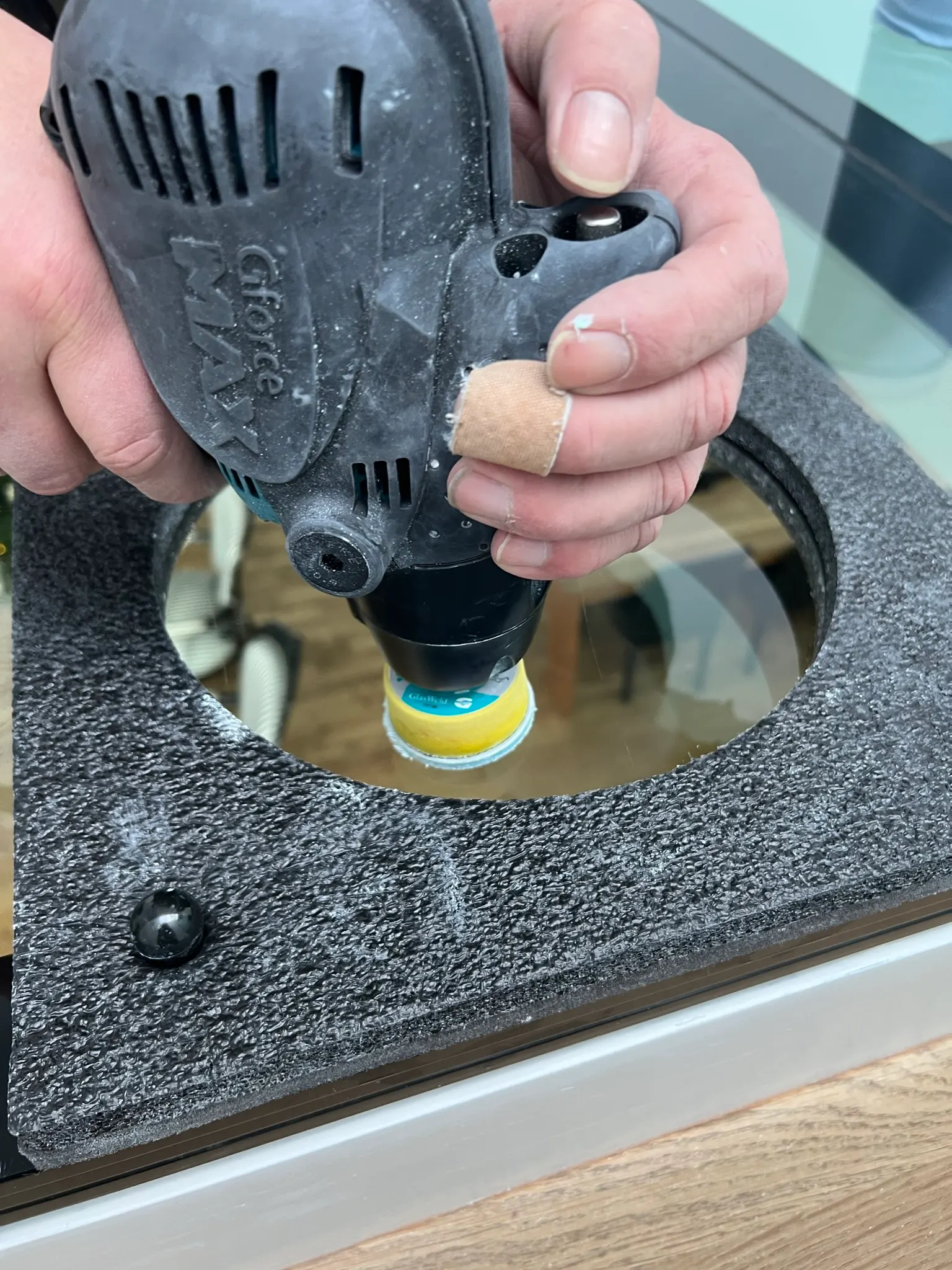
A sequence of abrasive discs of decreasing grit takes off the scratched layer.
Final polish
Dedicated polishing compounds bring back the clarity and the shine of the surface.
Final check
We check the quality of the result and the clarity we have restored.
On site or in the workshop
We work on the glass in place, on site — or, for more demanding pieces, in our workshop once the glass has been removed.
Which glazing can Vitrapolish bring back to life?
Scratched shopfronts
Key scratches, vandalism, accidental scraping on retail shopfronts. Polishing on site saves you closing the shop for a glass replacement.
Glass doors
Entrance doors, internal doors, office doors: scratches from everyday use, from house moves or from vandalism.
Shower screens and mirrors
Scratches on toughened glass shower screens and bathroom enclosures. Scratched or scuffed mirrors too.
Façade glazing
Scratches on façade glazing we can reach: work carried out on site with the Vitrapolish kit.
Graffiti on glass
Some graffiti (spray paint, acid etching) attacks the surface of the glass. Depending on the nature and the depth of the damage, polishing can restore clarity.
Special vehicle glazing
Buses, trams, trains: polishing scratched glazing at the depot or on site.
Important: polishing is not always possible
If the scratches are too deep, if the glass left after polishing would be too thin to be safe, or if the glass is toughened and the scratches reach the toughened surface zone, replacement is the only option. Vitrapolish assesses every case and recommends the right solution — where necessary through our glass repair and replacement service.
Glass polishing on the job
Glass polishing in action
Frequently asked questions about glass polishing
No. Polishing works on shallow to moderately deep scratches: key scratches, wear marks, accidental scraping. Very deep scratches — from diamond tools or power tools — call for so much material to be taken off that the minimum safe thickness would be breached. Vitrapolish surveys your glass free of charge and tells you what is possible before any work begins.
Polishing done properly leaves no mark visible to the naked eye in normal lighting. Under very strong, low-angle light, a slight change in the surface may be noticeable on the largest polished areas. Vitrapolish talks you through the expected result before starting work.
Yes, in most cases. Vitrapolish works on the glass in place with portable equipment: the shopfront or the door stays exactly where it is. For complex glazing, or for damage in hard-to-reach places, removing the glass and working on it in the workshop may be the better route.
As a rule yes, and by a wide margin — particularly for large panes and for high-value special glazing (toughened, laminated, anti-reflective). We price each case after the free survey, based on the area to be treated and the depth of the scratches.
Yes, within limits. Toughened glass can be polished where the scratches are shallow, provided the compressed surface zone created by toughening is left intact. The Vitrapolish survey establishes in advance whether the work is compatible with the toughening of the glass.
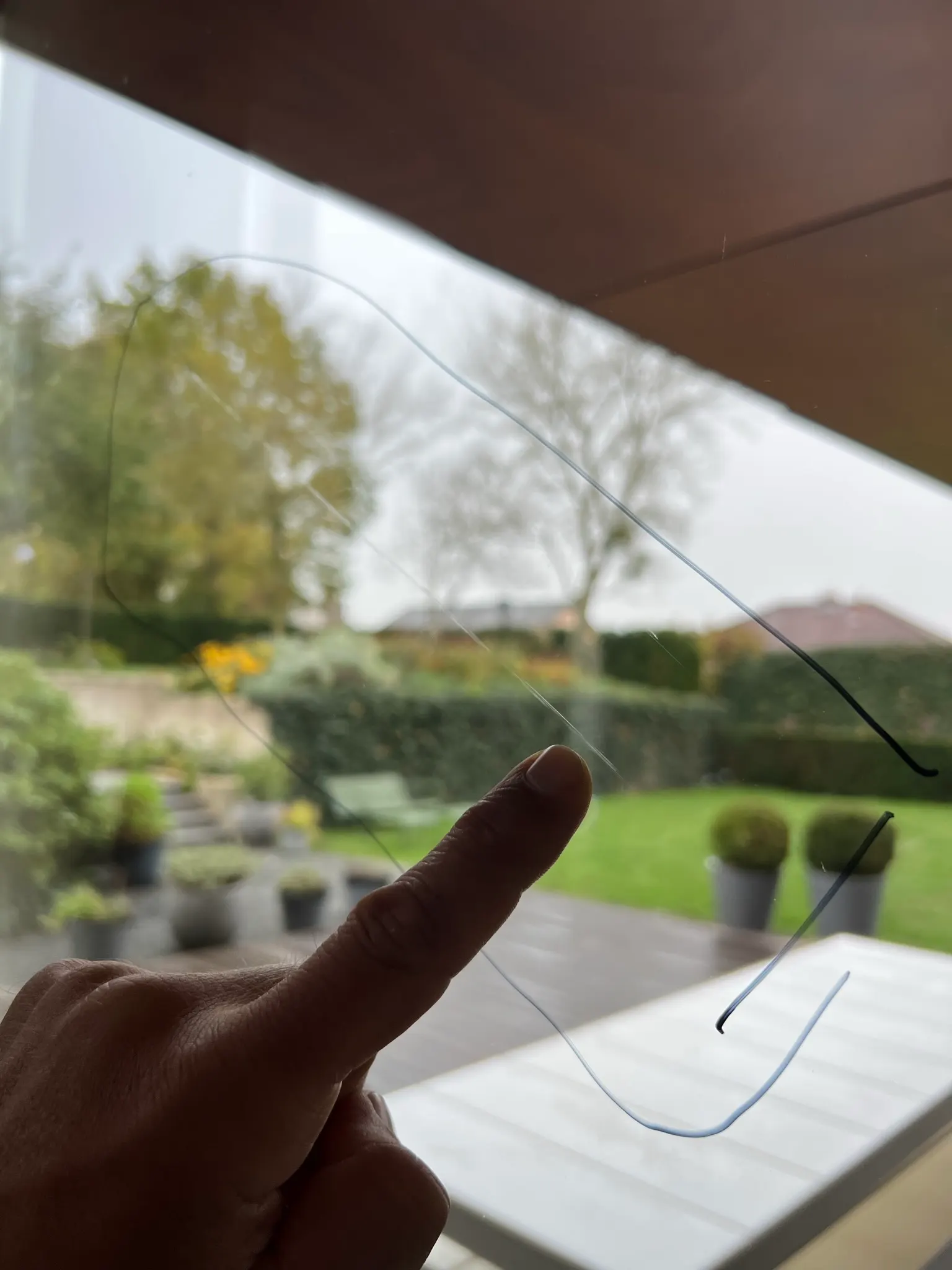
Scratched glass? Vitrapolish will survey it free of charge
On-site work throughout Luxembourg — free quote — results you can see straight away.