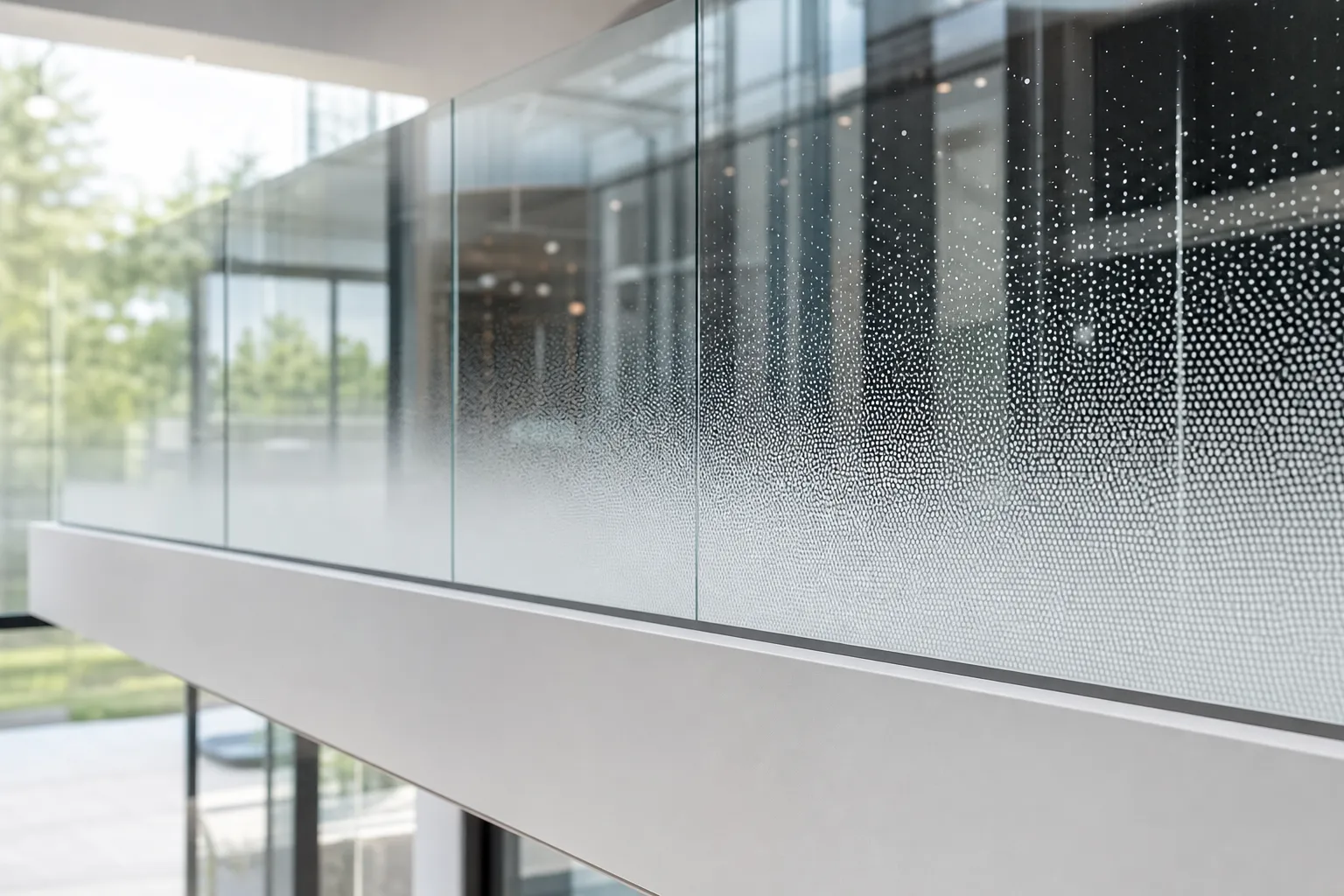
Screen Printing on Glass in Luxembourg — Anti-Slip, Decorative and Technical
A ceramic ink fired into the glass during toughening: a permanent, perfectly smooth decoration that stands up to abrasion and chemicals. Certified anti-slip, decoration, privacy or signage — in every format.
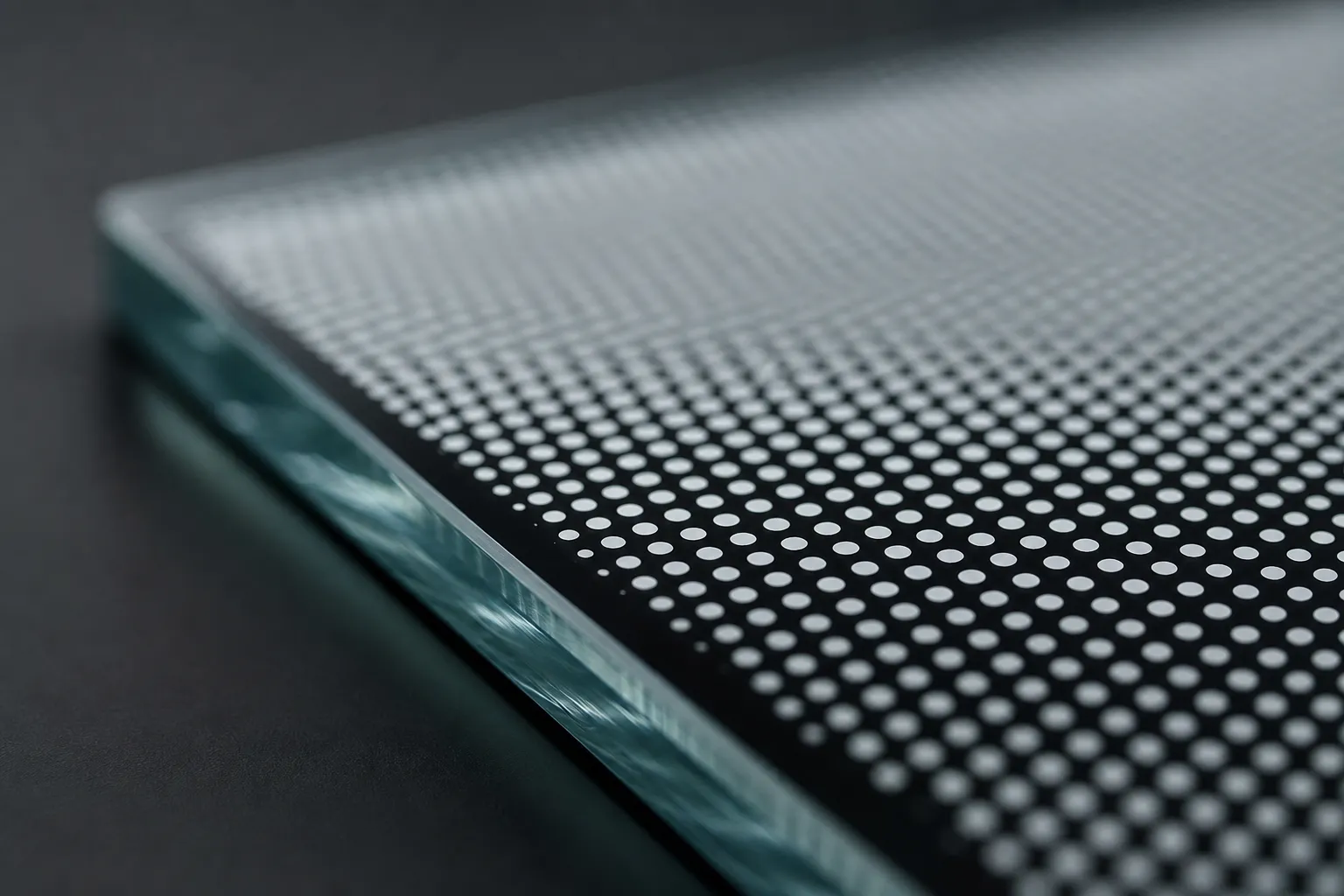
A permanent pattern, inseparable from the glass
Screen printing lays a ceramic or enamel ink on the surface of the glass, which is then fired in for good during toughening. The result is a permanent, perfectly smooth pattern that resists every chemical treatment and stands up to abrasion.
Vitralux offers screen printing for every application: certified anti-slip, decoration, privacy, signage.
Which screen printing suits your glazing?
| Type | Application |
|---|---|
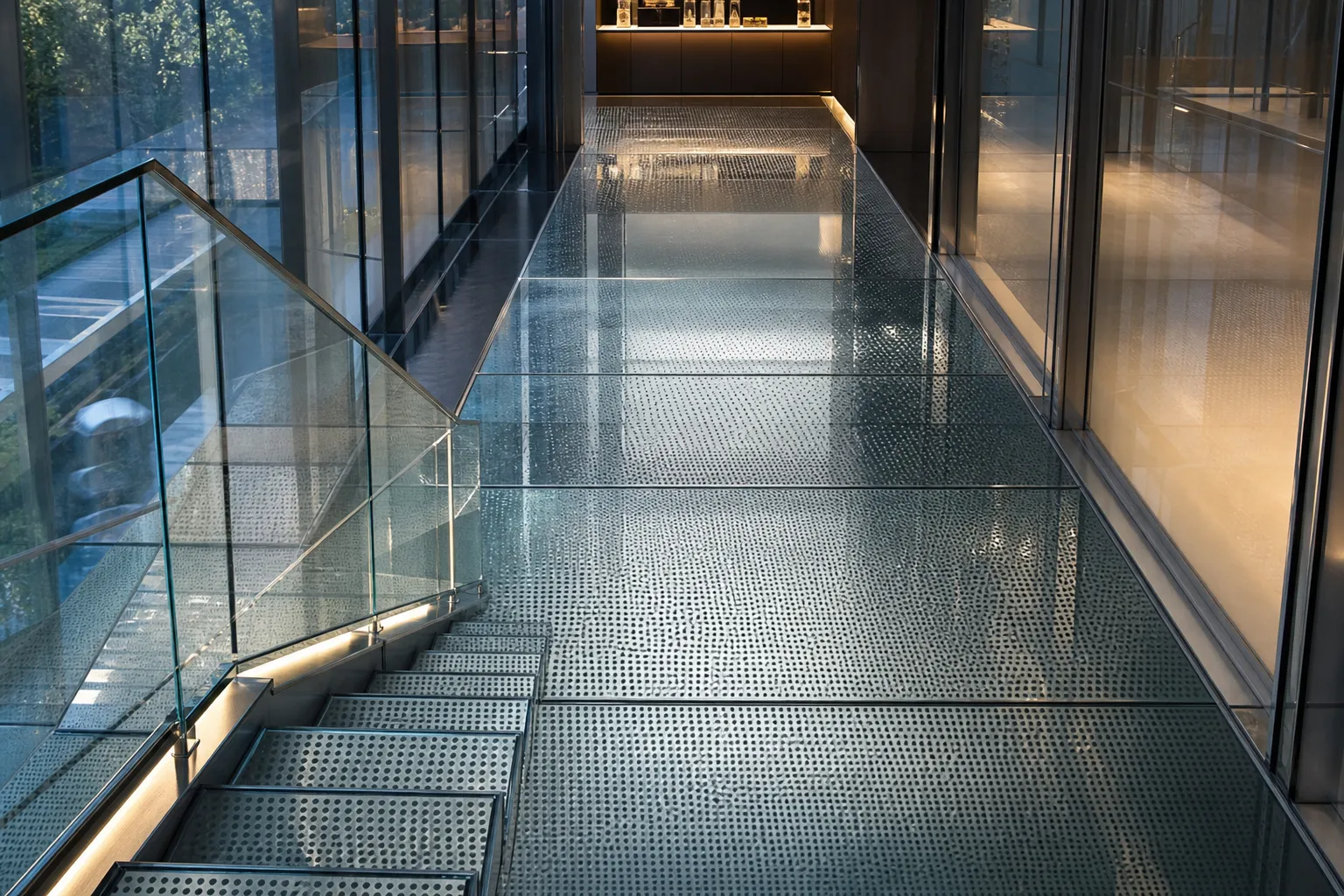
| Anti-slip R9 to R13 | Dots or patterns printed on floor panels, ramps and wet areas. Certified slip-resistance class, chosen to suit the use. |
| Decorative screen printing | Patterns, stripes, geometrics, logos — opaque, translucent or with a frosted effect. |
| Technical screen printing | Safety marking (glazing in risk areas), directional arrows, numbering. |
| Privacy screen printing | Opaque zones on shower glazing, partitions and ground-floor windows. |
| Solar screen printing | A reflective print that cuts solar gain on a façade (selective coefficient). |
Applied before toughening, permanent for life
Screen printing is applied before the glass is toughened. It is then fired at high temperature, which makes it entirely permanent and inseparable from the glass. A screen-printed pane cannot be altered once toughened. The anti-slip application is at the heart of our anti-slip structural glass floors.
Your questions about screen printing on glass
Screen printing lays a ceramic or enamel ink on the surface of the glass, which is then fired in for good during toughening. The result is a permanent, perfectly smooth pattern that resists every chemical treatment and stands up to abrasion.
No. Screen printing is applied before the glass is toughened, then fired at high temperature, which makes it entirely permanent and inseparable from the glass. A screen-printed pane cannot be altered once toughened: patterns and dimensions are settled when the order is placed.
Yes. Anti-slip dots or patterns printed on floor panels, ramps and wet areas carry a certified slip-resistance class from R9 to R13, chosen to suit how the glazing will be used.
Screen printing is ideal for repeating patterns, technical applications and certified anti-slip work, with the greatest durability. To reproduce a single image photographically in high definition, large-format digital printing is the better fit. Our advisers will point you to the right one for your project.
A screen printing project on glass in Luxembourg?
Decoration, anti-slip, technical work • Free quote.
Also worth a look: Anti-slip structural glass floors · Large-format digital printing · Glass sandblasting