Glass thickness is one of the first questions our customers ask. It is also one of the most important: too thin and the glass may break, too thick and it becomes heavy and needlessly expensive. This guide gives you the basic rules for each type of application, with the recommendations Vitralux has built on 160 years of experience.
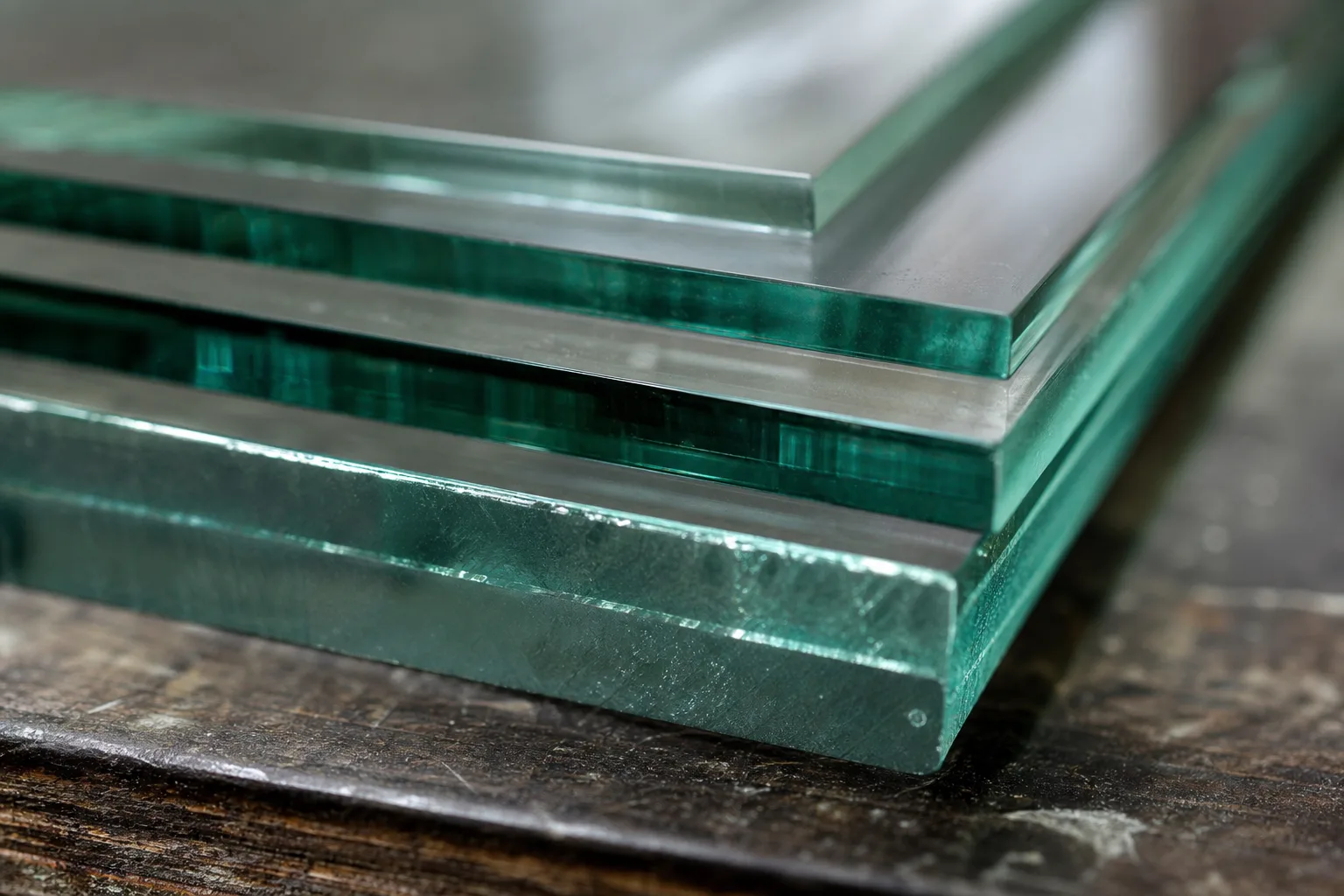
The general rule: the larger the surface, the greater the overhang and the heavier the load, the thicker the glass has to be. Glass deflects under load, and once that deflection passes a certain point, it breaks.
Glass shelves — the rule by length
- Up to 60 cm long: 6 mm is generally enough for a light load (soap, candles, small objects).
- 60 to 100 cm: 8 mm is recommended, especially if the shelf carries heavy items such as bottles or appliances.
- 100 to 150 cm: 10 mm minimum.
- Over 150 cm: 12 mm, or a technical opinion from Vitralux depending on the configuration.
- Radiator shelf: 10 mm minimum whatever the length (heat plus point loading).
Take a look at our range of glass shelves and cat flaps.
Mirrors — standard thicknesses
- Small bathroom mirror (under 80 cm): 4 mm as standard.
- Large mirror (80 to 150 cm): 5 or 6 mm depending on the fixings.
- Large wall mirror (over 150 cm): 6 mm minimum, 8 mm if fitted without a frame.
- Safety mirror (laminated): 2×4 mm or 2×5 mm depending on the class.
Shower screens — the minimum standard
The European standard recommends a minimum of 6 mm toughened glass for shower screens, and 8 mm for large screens or frameless structures. In practice, Vitralux always recommends 8 mm for a standard shower screen and 10 mm for large enclosures.
- Simple walk-in screen: 6 to 8 mm depending on the size.
- Enclosure with a pivot or sliding door: 8 mm minimum.
- Full-height screen with no visible profile: 10 mm recommended.
Find out more about our made-to-measure shower screens.
Glass balustrades — a structural calculation is mandatory
For glass balustrades, the thickness cannot be settled without a structural calculation based on the drop height, the horizontal load expected and the fixing system. The European standard requires laminated glass for every balustrade. In practice, thicknesses run from 2×4 mm indoors to 2×10 mm outdoors at height. Vitralux carries out the calculation for your particular configuration.
See our glass balustrade projects.
The Vitralux rule of thumb
When in doubt, Vitralux always recommends the thicker option. The cost difference between 6 and 8 mm is marginal next to the cost of a replacement after a breakage.