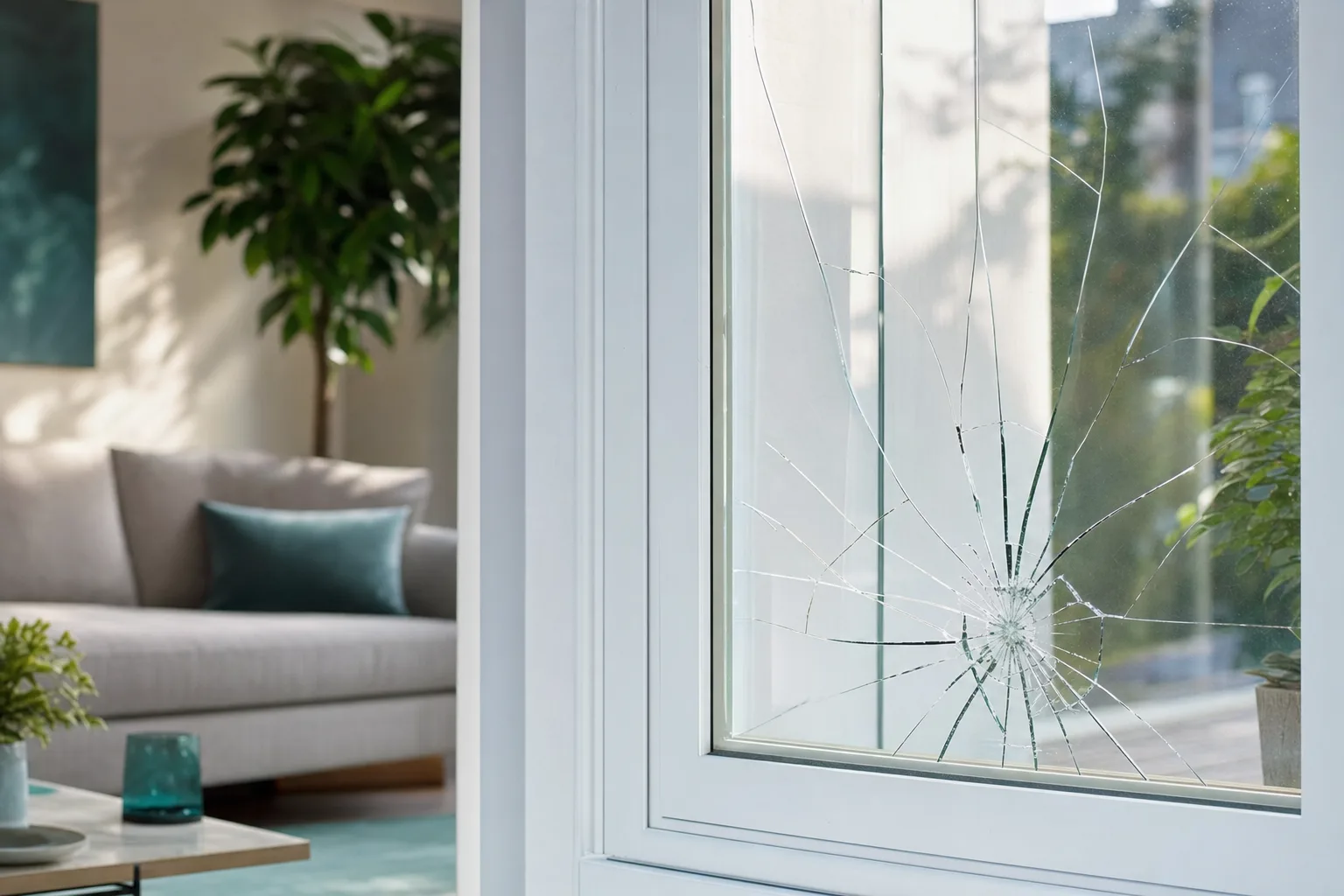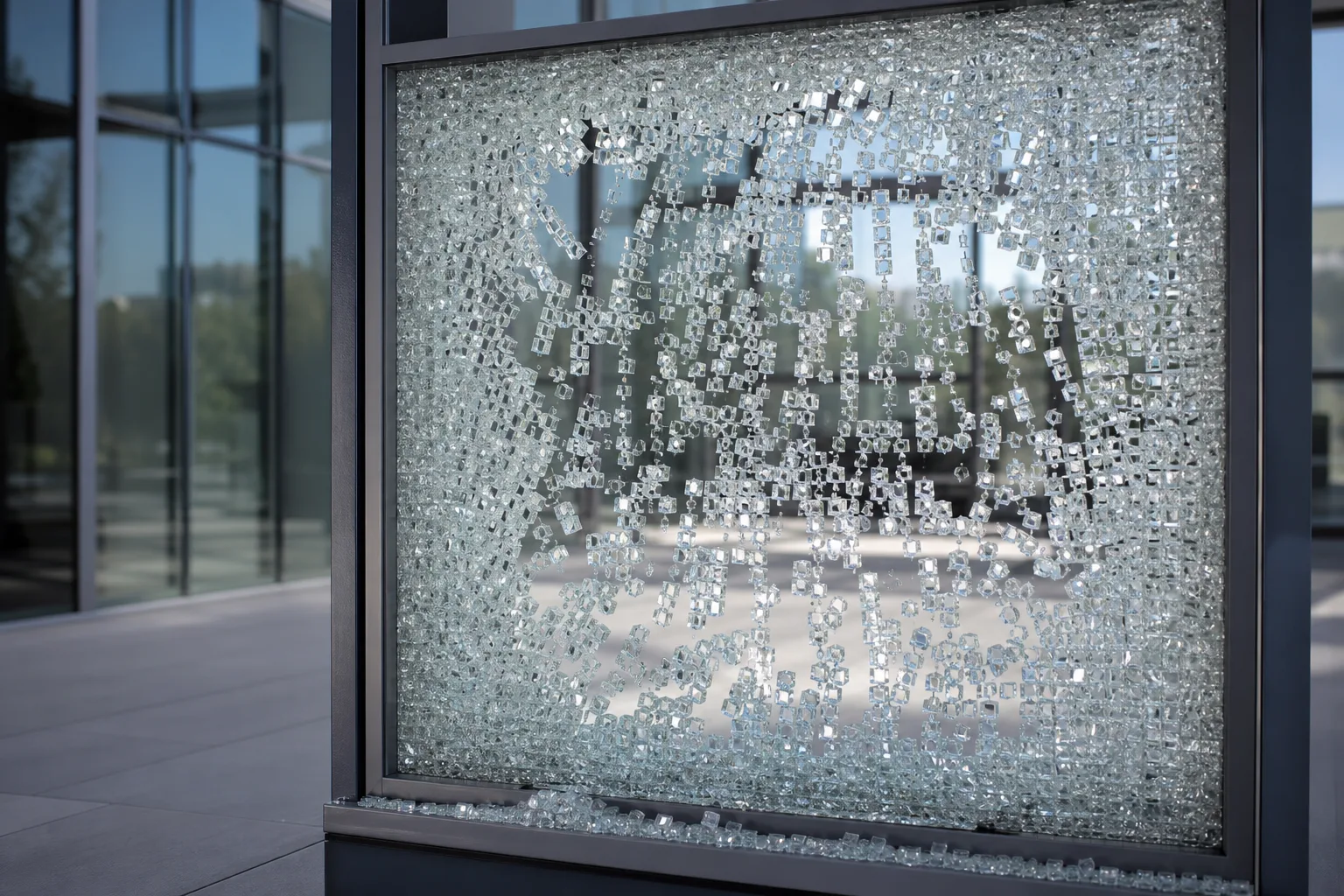
It happens without warning: a pane of toughened glass shatters spontaneously, with no visible impact, sometimes in the middle of the night. The fragments fall, the façade or the window is left open, and nobody can work out what happened. This article explains the mechanism behind it, the risks that come with it, and the solutions that stop it happening twice.
1. The culprit: nickel sulphide (NiS)
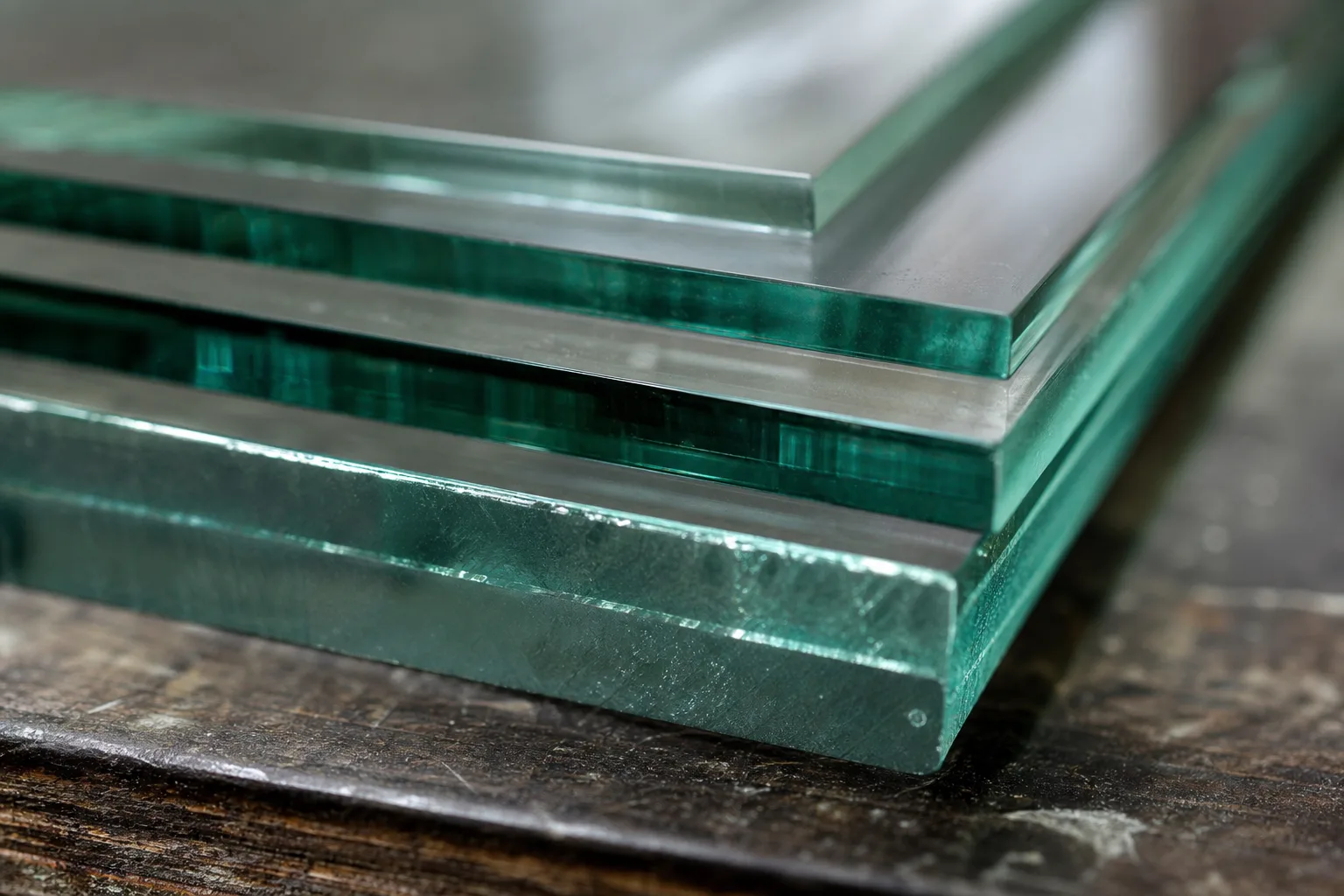
Toughened glass is made by heating ordinary glass to more than 600°C and then cooling it very quickly. That process locks high internal stresses into the pane, which is what gives it its impact resistance. But when the raw glass is produced, tiny inclusions of nickel sulphide (NiS) can form: microscopic, practically invisible particles that end up trapped inside the glass once it has been toughened.
The problem is that heat and thermal cycling — day to night, summer to winter — make those NiS inclusions expand slowly. After months or years, that expansion creates an extra stress that adds to the toughening stresses already present. Once the critical threshold is passed, the pane shatters instantly — from the inside, with no impact from outside.
2. How common is it?
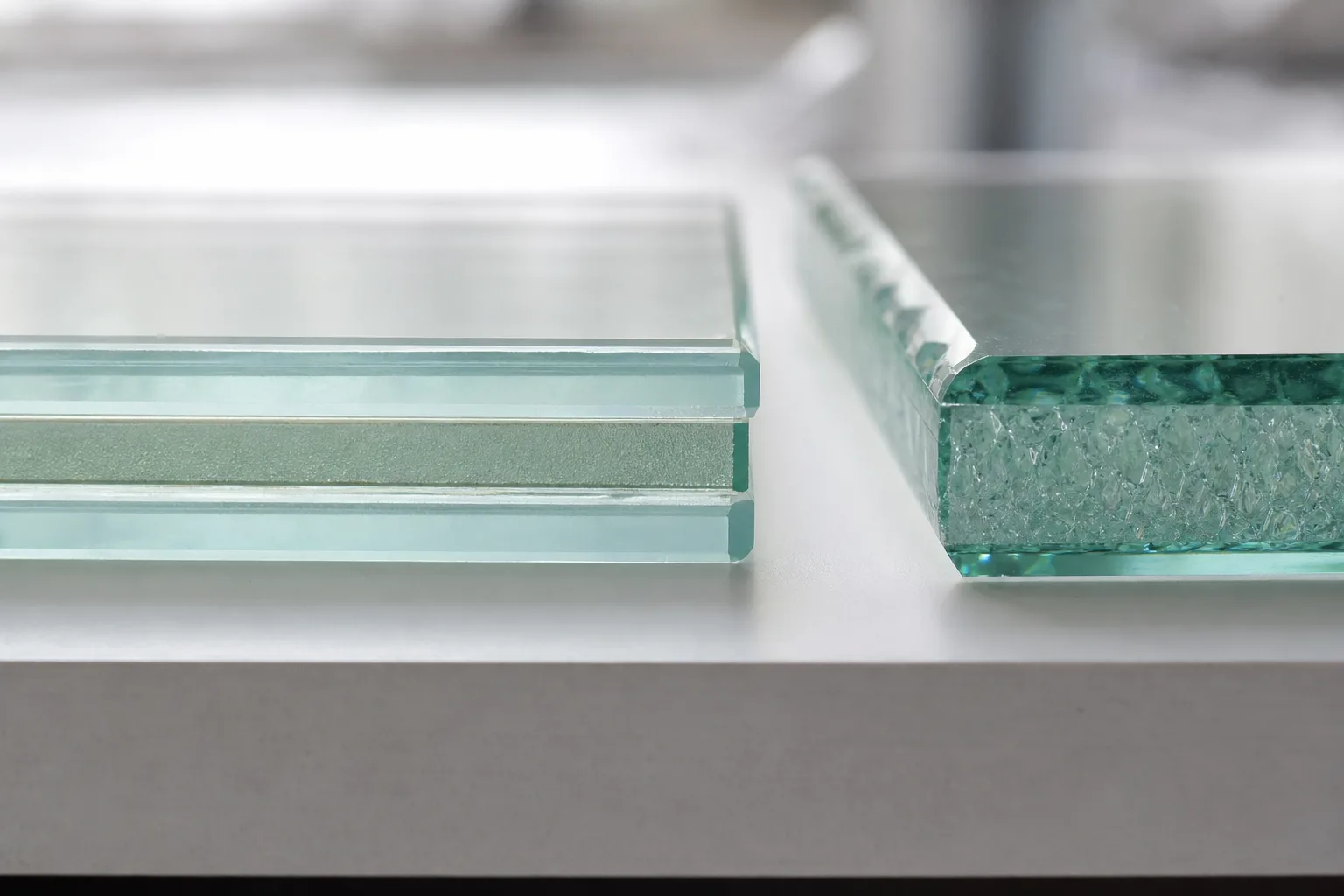
Statistically, spontaneous breakage caused by nickel sulphide affects roughly 1 toughened pane in 1,000 to 3,000. That sounds low, but on an office building with 500 panes in the façade the odds become significant. This is exactly what lay behind the spontaneous breakages on the façades of the K2 complex on Kirchberg in Luxembourg, where Vitralux replaced the monolithic toughened panes with laminated safety glass (VSG), which holds together even when it breaks. Work of that kind falls under our expertise in glass façades.
3. The heat soak test: removing the risk before installation
The heat soak test (HST) is a preventive treatment required in many European countries for toughened façade glazing. The principle is simple: the toughened glass spends several hours in an oven at 290°C. That heat accelerates the expansion of any NiS inclusions present. Defective panes break inside the oven, under control, and are discarded. Panes that come out of the test intact have a considerably reduced risk of spontaneous breakage.
For new toughened façade glazing, Vitralux systematically recommends laminated safety glass rather than monolithic toughened glass. If laminated glass breaks, it stays where it is: no fragment falls on the people below. Where the regulatory demands are highest, the same principles apply to specialist glazing such as fire-rated glazing.
4. What to do if your toughened glass has already shattered
- Make the area safe immediately
- Call Vitralux for a replacement call-out
- Tell your insurer (spontaneous breakage is covered by most policies)
- Ask Vitralux to replace the pane with laminated safety glass so it cannot happen again